
What does this mean?
Idu (andre) yenu?

This flash essay is part of a collaborative, constrained-writing challenge undertaken by some members of the Bangalore Substack Writers Group. This month, each of us examined the concept of ‘LANGUAGE’. At the bottom of this snippet, you’ll find links to other essays by fellow writers.
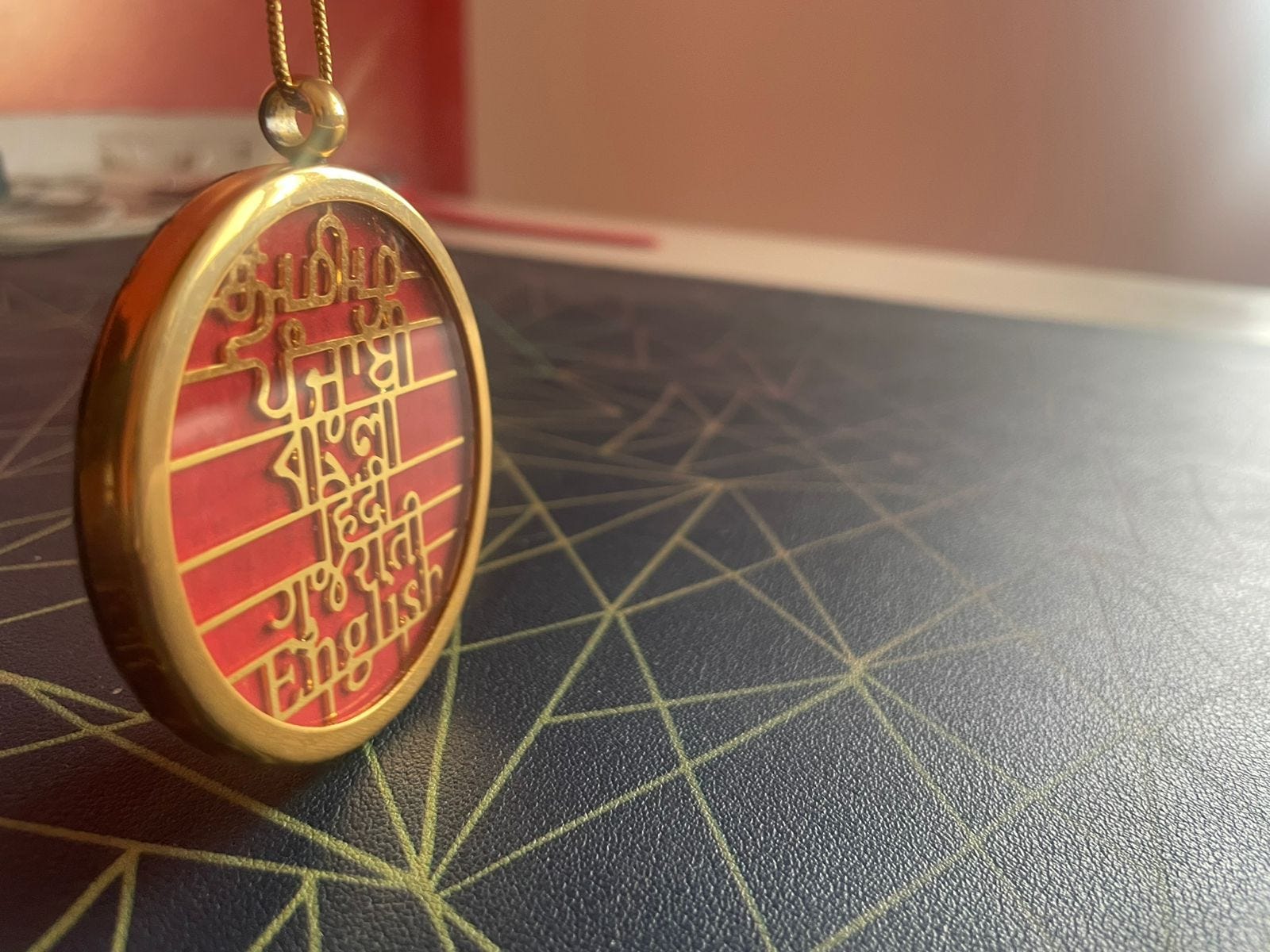
Image Credit: Aarti Krishnakumar, Aarti’s Substack
As is the case with most urban couples, my partner and I speak in different ‘tongues’.
Our children were born to a Kannada mother-tongue and a Tamizh father-tongue, with English as the tongue-in-common.
I read Kannada books to Baby K and Kutty R. Their Thatha speaks to them in Kannada. Their late Ajji would sing to them in Kannada and write them little Kannada ditties. Their Paati regales them with Tamizh songs and stories, their Thatha peppers his English conversations with ‘pattanis’ and ‘polladeys’.
Baby K understands and speaks Kannada, has just learnt to read and write in English, understands and speaks Hindi and understands Tamizh. Kutty R knows English, has just begun to learn to write the English alphabet, understands and speaks Kannada (mostly by adding ‘ooo’ to English words), understands and speaks Hindi and sort of understands Tamizh.
Our cook, G’s primary language of communication is Hindi. The kids’ Hindi is better than their Tamizh; every morning, when they speak to G aunty, they have no other language of communication, but Hindi. When one is pressed to communicate with the other, we will learn the language the other person knows. There is a sense of purpose and urgency to learn the language. That is how I learned my Kannada.
All through school, though Kannada was my mother-tongue and my ‘second’ language, the language I thought instinctively in, was English. My 10th standard Kannada exam comprised of 30 Kannada prose pieces that I had to read and comprehend. My mother was my Audible - reading the chapters aloud over and over, as many times as I asked her to, tirelessly and with the right inflection, every single time. ‘Mummy, what does that mean?’, ‘Amma, idu andre yenu?’ Repeat, go back, read again.
This changed when I was 17, pursuing under-graduation in a university where my class had only 50 English speaking students with a total strength of 120. Second day of college, I overheard a senior talking to another in colourful Kannada, which I did not understand. I went home and casually asked my mother- ‘Mummy, what does $&@@#@ mean?’ Without a blink or a blush, my mother explained my first profanity in Kannada.
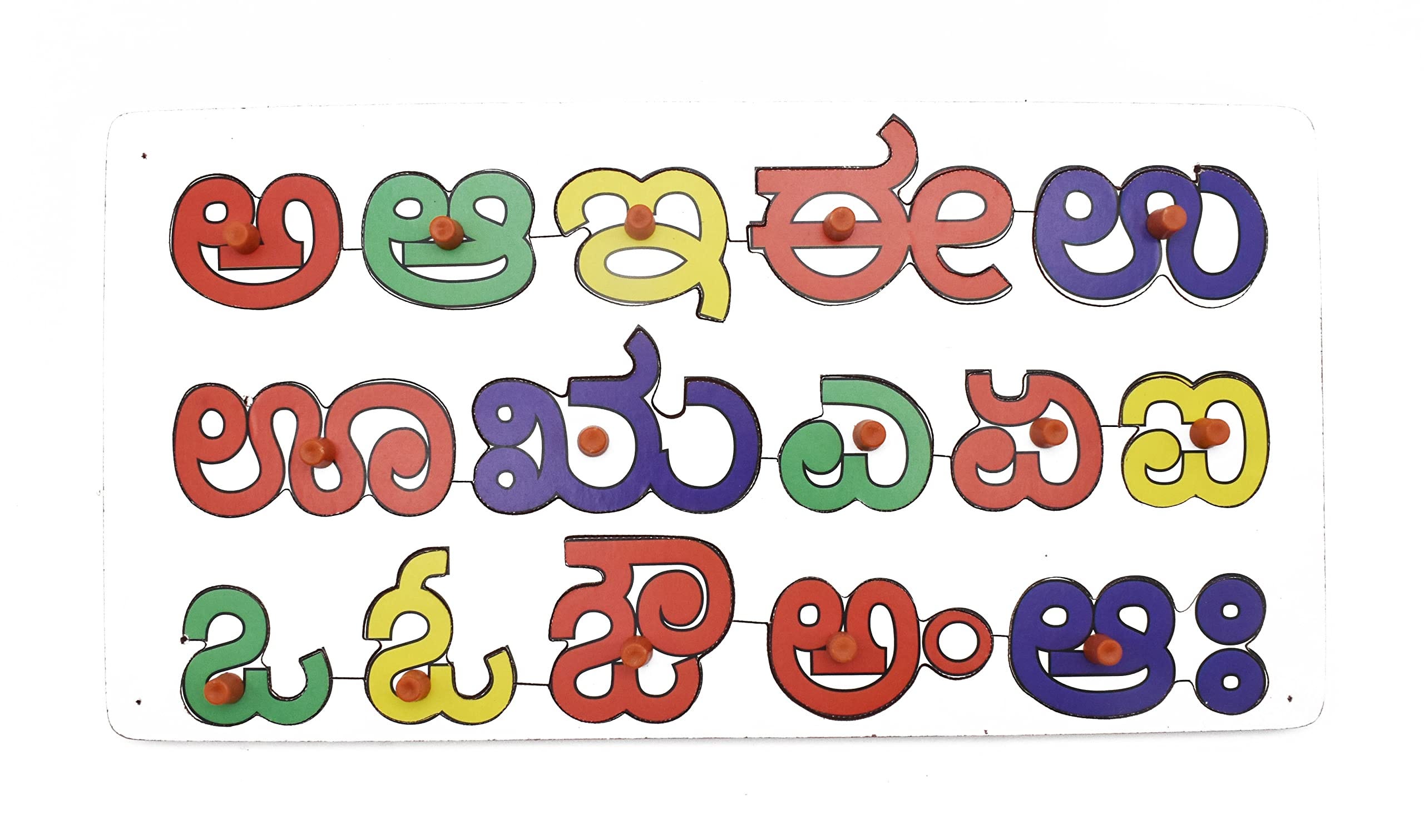
Image credit: www.amazon.in
The five years in the University improved my spoken Kannada. A year-long internship involving reading of government documents in Kannada improved my reading abilities. I did call upon my mother now and then asking- ‘Amma, runabhara andre yenu?’, ‘Mummy, how do I translate Executive Engineer to Kannada?’.
With the passage of time, my Kannada has come to pass muster; enough to savour an un-translated Yayati or Tejo Tungabhadra. I can also curse in colourful Kannada, when the traffic moment warrants it!
Since the kids’ arrival, I am heartened by the thought of passing down my mother-tongue to them. A year or so ago, I overheard Baby K talking to her Thatha…
Baby K: Thatha, idu yenu? (What is this? pointing to her eyes)
Thatha: Kannu
K: Thatha, idu yenu? (pointing to her ears)
Thatha: Kivi
K: Thatha, idu yenu? (pointing to her nose)
Thatha: Moogu
K: Thatha, idu yenu? (pointing to her mouth)
Thatha: Bayi
K: BYE Thatha (guffawing loudly; with Thatha also guffawing loudly and proudly)
Yup, the kids will be alright…
Here’s a list of other flash essays by fellow Bangalore Substack writers
Loss of a language By Rakhi Anil
Beyond Words and Dialects by Aarti Krishnakumar, Aarti’s Substack
In search of my lost mother tongue by Siddhesh Raut, Shana, Ded Shana
The language question by Rahul Singh, Mehfil
Geography & Language by Devayani Khare, Geosophy
The Dance of Languages by Haridas Jayakumar, Harry
Poetic Silence - From Anand Bhavan to 3039 and back by Amit Charles, @acnotes
No Garam Aloo in Tamil Nadu by Ayush, Ayush's Substack
I’ve been thinking a lot about tongues, again. by Ameya, (Always Ameya)
The Language Beneath Words by Mihir Chate, Mihir's Substack
Urgh, by Shruthi Iyer
The Language of Murder by Gowri N Kishore | About Murder, She Wrote.
I have no words by Richa Vadini Singh, Here’s What I Think
Jal-Elephants, Thread-Navels, and Other Sanskrit Beasts by Rajat Gururaj, I came, I saw, I Floundered
Of Language, Love and Longing: Politics, Mother Tongue and Loss by Aryan Kavan Gowda, Wonderings of a Wanderer
The Bengaluru Blend by Avinash Shenoy, Off the walls
An Ode to Languages, by Lavina G, The Nexus Terrain
This is where I would like to be when it comes to passing on my mother tongue to the next generation. Appreciate you sharing this piece full of joy, tenderness and connection.
Loved this post.. Me & My partner are from different backgrounds- in terms of language, and its been a fun journey learning each others' language. Am tamil, he is part palaghat and part bengali.. but does speak some broken tamizh/malayalam..
Since moving to Bangalore, we are learning Spoken kannada & its been interesting talking to people, using words i've learnt, making sense of them and why some are used differently in certain context etc.. Keep asking questions.. loving the learning process...
your post also made me miss my thatha a lot.. :)